
The rainbow runner (Elagatis bipinnulata) is one of the ocean’s fastest and most visually striking pelagic fish, found cruising through tropical and subtropical waters worldwide. The rainbow runner is a common species of pelagic marine fish of the jack family, Carangidae. This guide is intended for anglers, divers, and marine enthusiasts interested in learning about the rainbow runner fish. Understanding the rainbow runner is important for sustainable fishing, marine biodiversity, and appreciating one of the ocean’s most striking pelagic species. If you’ve spent time fishing offshore or diving around FADs, there’s a good chance you’ve encountered these sleek, colorful jacks.
This guide covers everything you need to know about rainbow runner fish—from identification and biology to fishing techniques and culinary considerations.
Key Takeaways
- The rainbow runner is the only species in the genus Elagatis and belongs to the jack family Carangidae, commonly known by names like hawaiian salmon, spanish jack, and rainbow yellowtail.
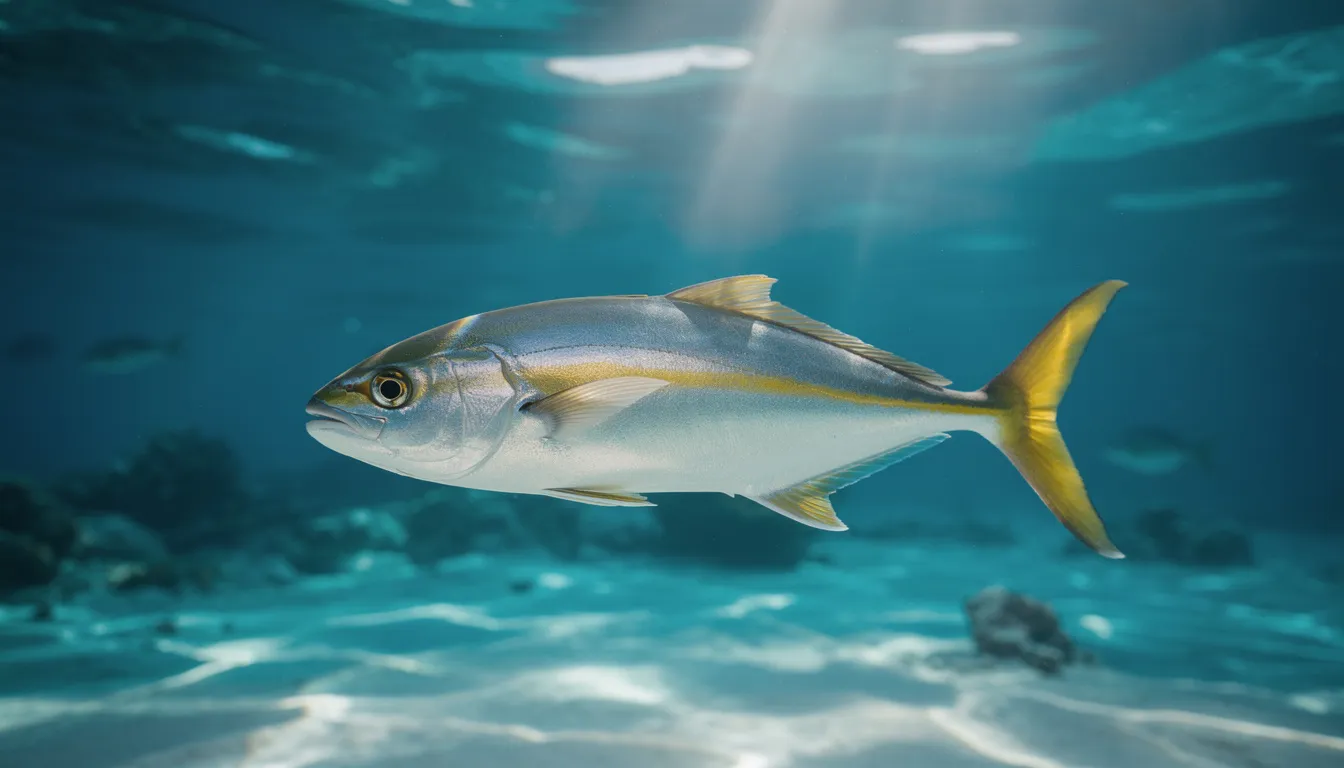
- These fish feature a torpedo-shaped body with a blue green back, a bright yellow stripe running along the midline, bluish white stripes on the sides, and a deeply forked yellow tail.
- Rainbow runners are mid-level predators that feed on small fish, squid, and crustaceans, serving as both popular game fish and effective bait for larger species like marlin and tuna.
- While the flesh is generally considered good eating with firm, mild-flavored meat, there are occasional ciguatera concerns in some tropical regions—always follow local advice.
- Found in the pacific ocean, Atlantic, Indian Ocean, and Gulf of Mexico, these fish prefer warm offshore areas and frequently congregate around floating debris and FADs.
Overview of the Rainbow Runner
The rainbow runner, scientifically known as Elagatis bipinnulata, is a member of the jack family Carangidae. Unlike many of its close relatives that patrol reef edges, this species is primarily pelagic, spending most of its life in open ocean waters rather than hugging the shoreline.
These fish commonly measure between 60 and 90 centimeters (roughly 24 to 36 inches), though larger specimens can exceed 1 meter in length and weigh up to 17 kilograms (about 38 pounds). Most people encounter them in the 15 to 37-pound range when fishing offshore areas.
This article breaks down the identification features, biology, habitat preferences, fishing methods, and practical uses of this underappreciated pelagic species. Whether you’re trying to target them specifically or simply want to know what you’ve caught, the information here will help you understand these remarkable fish.
Taxonomy and Naming
The rainbow runner belongs to family Carangidae—the jacks and trevallies—and holds the distinction of being the sole member of its genus, Elagatis. This makes it somewhat unique among its relatives, as most other species in the family share their genus with multiple close cousins.
The species was first described scientifically in 1825 as Seriola bipinnulata, placing it initially among the amberjacks. Roughly 15 years later, researchers recognized enough morphological differences to warrant its own genus, and it was reassigned to Elagatis where it remains today. The body shape and ecology show clear relationships to amberjacks and other Seriola species, but the rainbow runner’s more streamlined form and distinct coloration set it apart.
Common names for this fish vary by region:
- Rainbow runner – the most widely used English name
- Rainbow yellowtail – references the yellow tail and colorful body
- Hawaiian salmon – common in Hawaii, though unrelated to true salmon
- Spanish jack – used in some Atlantic and Caribbean regions
- Kamanu – Hawaiian language name
The name “rainbow runner” comes from the fish’s brilliant purple and blue striping combined with its constant swimming behavior. These fish rarely stop moving, and their colorful appearance as they cruise through the water column makes the name entirely fitting.
Identification and Appearance
Rainbow runners possess an elongated, subcylindrical body shape built for speed. The rainbow runner has a subcylindrical, elongated to almost fusiform body with a long, pointed head and snout. The overall form is streamlined with a pointed snout, relatively small head, and a deeply forked tail perfectly adapted for sustained high-speed swimming. Among jacks, they’re on the slimmer side—more torpedo than football.
The coloration is where these fish truly stand out. The back displays a blue green to broader olive shade, transitioning to a bright yellow stripe that runs along the midline from head to tail. Two narrow, light blue to bluish white stripes run longitudinally along the sides of the rainbow runner, with a broader olive to yellow stripe between them. Above and below this central stripe, you’ll notice bluish white stripes that add to the overall “rainbow” effect. The belly fades to silver white, and a subtle yellow tint covers the fins. Some specimens show brilliant purple shading on the upper body that shifts depending on light conditions.
For those needing precise identification, the fin structure provides reliable markers:
Feature | Description |
|---|---|
First dorsal fin | Contains about 6 spines (often folding into a groove) |
Second dorsal fin | One spine followed by 25-27 soft rays |
Anal fins | Detached anterior section with one spine, followed by soft-rayed portion |
Finlets | Small finlets present behind both dorsal and anal fins |
Tail | Deeply forked with yellow coloration |
One key feature separating rainbow runners from many other jacks is the absence of heavy bony scutes on the caudal peduncle (the narrow portion just before the tail). Most jacks have these reinforced scales, making the rainbow runner’s smooth skin in this area a useful identification point. |
|
Typical length falls in the 40-80 cm range, with maximum documented sizes reaching approximately 1.8 meters (6 feet) and weights up to 17 kg (38 pounds). Weight is an important identifying characteristic, especially for distinguishing larger specimens, as the maximum recorded weight helps set apart the biggest rainbow runners from other similar species.
Distribution and Habitat
Rainbow runners exhibit a circumtropical distribution, meaning they occur in warm waters across all major ocean basins. You’ll find them in the Atlantic, pacific ocean, and Indian Ocean, plus the Gulf of Mexico and numerous island chains throughout the tropics.
Regional distribution includes:
- Western Atlantic: From Massachusetts and Bermuda southward through the Caribbean to northeastern Brazil, including the gulf of Mexico, Bahamas, and both Greater and Lesser Antilles
- Eastern Atlantic: Canary Islands, West African coast, and occasional records from the Azores
- Indo-Pacific: Red Sea, Indian Ocean islands, Philippines, Indonesia, Australia (from Shark Bay to New South Wales), marshall islands, and throughout Polynesia
- Eastern Pacific: Baja California down to Peru, including offshore islands
- Hawaii: Common around the main islands and atolls
These fish prefer water temperatures roughly between 21-27°C (70-80°F) and typically inhabit the upper 100-150 meters of the water column. They’re most commonly found near the surface in clear, oceanic waters.
While primarily an offshore species, rainbow runners show behavioral flexibility. They frequently associate with:
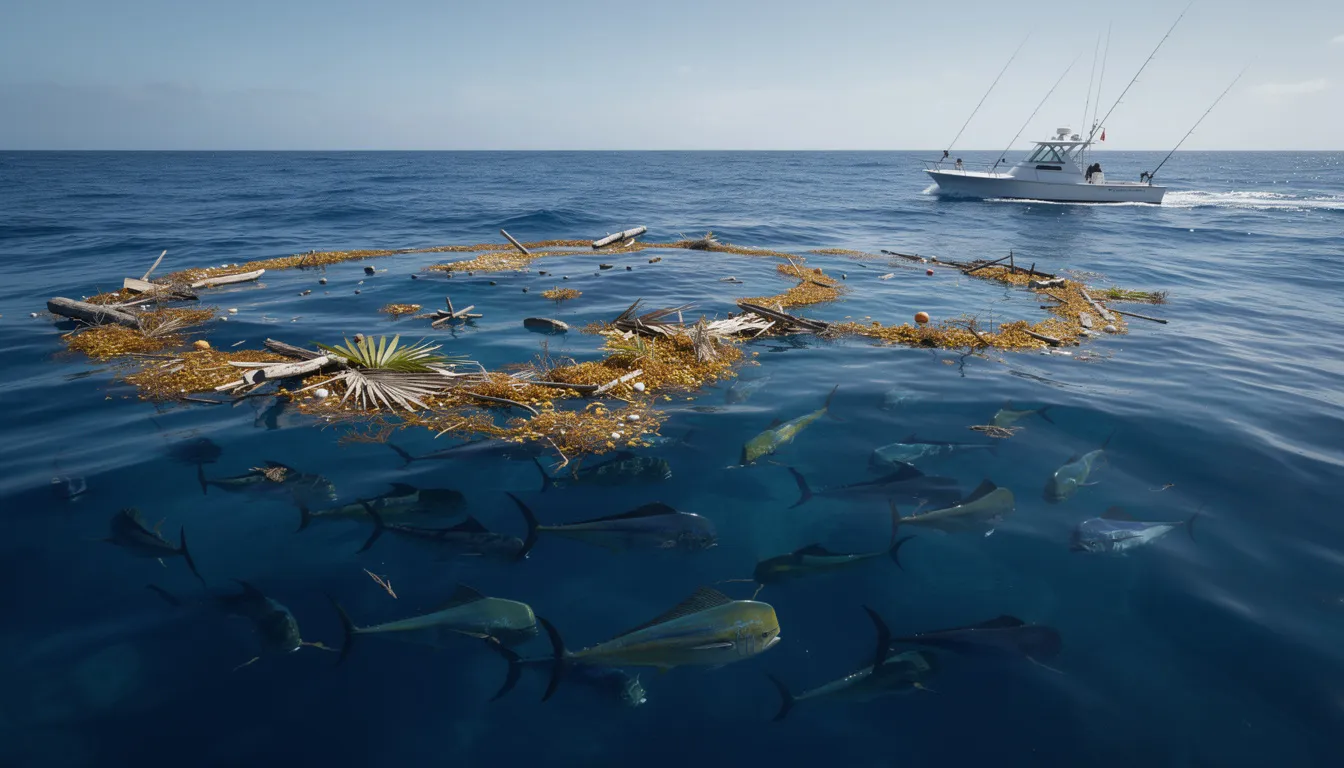
- Floating debris and logs
- Fish-aggregating devices (FADs)
- Offshore reef drop-offs
- Current lines and temperature breaks
- Larger marine animals (sharks, whale sharks, manta rays)
Juvenile fish behave somewhat differently than adults. Young rainbow runners often school tightly around floating mats of Sargassum or other flotsam, using it for protection. Adults form looser aggregations or swim in large schools, sometimes numbering in the hundreds around productive FADs or bait concentrations.
The species appears rare or absent from the Persian Gulf and has not established permanent populations in the Mediterranean Sea, though individuals occasionally enter through the Suez Canal.
Biology, Diet, and Behavior
Swimming and Predatory Behavior
Rainbow runners are constantly swimming mid-water predators that rarely rest. Their streamlined body and forked tail enable sustained cruising speeds and impressive bursts when chasing prey or evading larger predators. Among jacks, they rank as powerful swimmers capable of covering significant distances.
Feeding Habits
The diet consists primarily of:
- Small fish: Anchovies, sardines, juvenile mackerel, and flying fish
- Cephalopods: Squid and small octopus
- Crustaceans: Shrimp, pelagic crabs, and planktonic crustaceans
Rainbow runners tend to eat whatever prey is locally abundant. Studies in the pacific ocean show they prefer certain species like Decapterus macarellus (mackerel scad) when available. Juvenile fish rely more heavily on planktonic crustaceans before graduating to larger prey as they grow.
Feeding typically occurs near the surface around current edges, floating objects, and bait schools. They use their speed and schooling behavior to corral prey, often hunting cooperatively with other species offshore.
Reproduction and Growth
These fish generally reach maturity around 60 cm in length. Spawning behavior is temperature-dependent—in waters consistently above 27°C, reproduction occurs year-round. In cooler subtropical waters, spawning is restricted to warmer months.
Rainbow runners engage in pair spawning, with males and females releasing eggs and sperm simultaneously into the water column. The fertilized eggs are pelagic, drifting with currents until hatching. Juveniles eventually migrate from spawning grounds, sometimes sheltering in floating Sargassum mats during their journey.
Growth rates by age:
Age | Approximate Length |
|---|---|
1 year | 30 cm (12 in) |
2 years | 46 cm (18 in) |
3 years | 59 cm (23 in) |
4 years | 69 cm (27 in) |
5 years | 77 cm (30 in) |
Role in the Food Web
Rainbow runners occupy a middle position in the pelagic food web. They’re important prey for larger predators including:
- Yellowfin and bigeye tuna
- Marlin and sailfish
- Large sharks
- Bigger jacks and wahoo
- Cobia
This makes them a critical link between smaller forage fish and the apex predators that anglers typically target.
Observable Behaviors
Divers regularly describe rainbow runners as curious and interactive animals. They often approach scuba divers, circling several times before moving on. This inquisitive nature makes them memorable encounters on offshore dives.
Around FADs and floating debris, they form tight schools that can number in the dozens or hundreds. When abundant prey is present, feeding frenzies attract other species, creating the offshore “boils” that anglers watch for.
Importance to Fisheries and as Food
Rainbow runners aren’t typically the primary target of major commercial fisheries. Instead, they’re commonly taken as bycatch in tropical tuna and shark longline and purse-seine operations. When large fish aggregating devices are deployed, rainbow runners concentrate around them and end up in catches alongside the target species.
Global reported landings have fluctuated significantly over the decades, peaking in the late 1990s before declining as reporting methods and fisheries changed. The actual harvest is likely underreported since many catches get lumped into general “jack” or “bycatch” categories.
Where they’re utilized commercially, rainbow runners are sold in several forms:
- Fresh whole fish in local markets
- Filleted and sold fresh or frozen
- Salted or dried in some Pacific island communities
- Occasionally smoked
Culinary Value
The flesh is firm, pale to white, and moderately oily. Flavor is considered fair to very good depending on freshness and how the fish was handled. Like most pelagic species, quality drops rapidly without proper bleeding and icing immediately after catch.
Common preparations include:
- Grilling or baking with citrus and herbs
- Sashimi and poke in Hawaiian and Japanese cuisine
- Smoking for preserved preparations
- Pan-frying as steaks or fillets
Food Safety Considerations
In some tropical reef-associated areas, larger rainbow runner specimens have occasionally been implicated in ciguatera poisoning. This toxin accumulates in fish that eat on coral reef food chains, so the risk varies by location. Always follow local guidelines and traditional knowledge—if locals avoid eating large fish from a particular area, there’s usually a reason.
Archaeological evidence from Pacific island middens shows that rainbow runners were historically caught using trolling lures from outrigger canoes, indicating their importance to island cultures for centuries.
Recreational Fishing for Rainbow Runners
For offshore anglers, rainbow runners often show up as a bonus catch while targeting tuna, mackerel, wahoo, or billfish. They’re most commonly hooked around FADs, floating debris, or along current edges where prey concentrates.
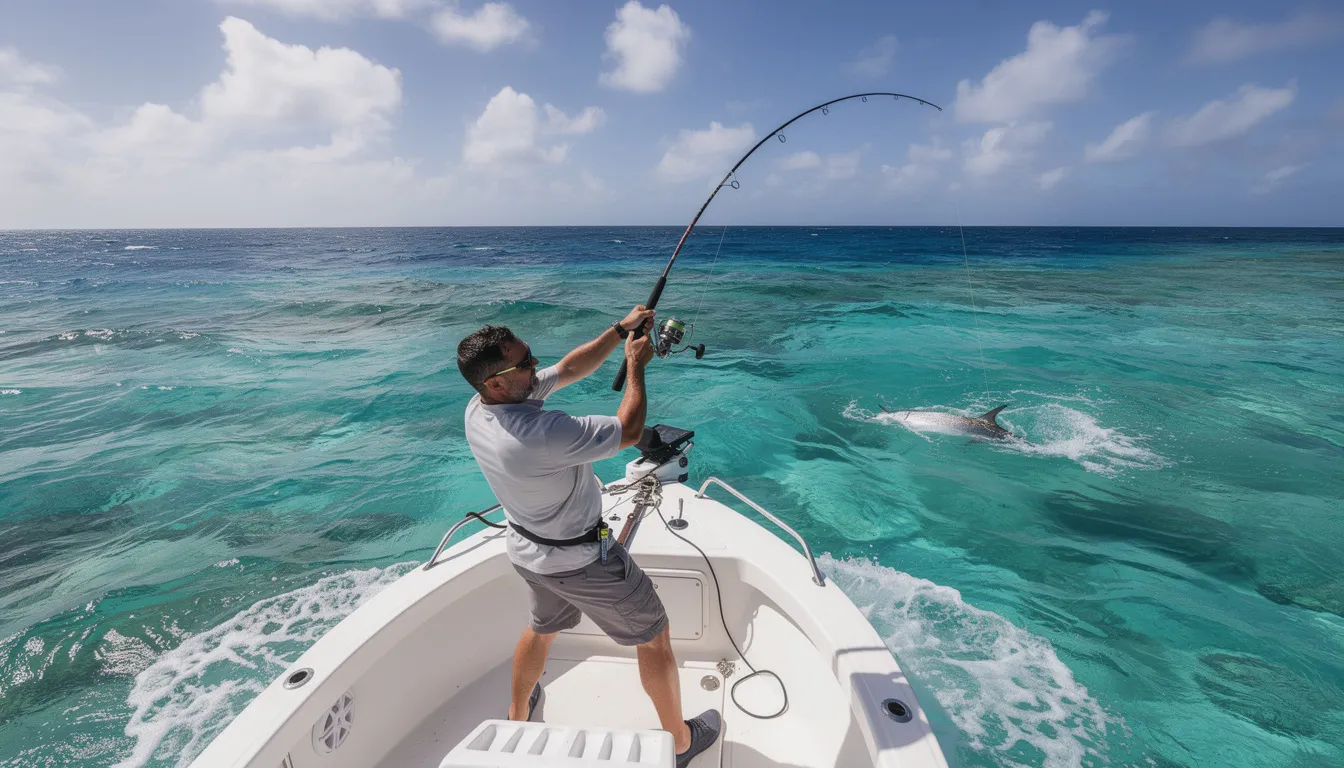
While not as famous as their larger cousins, rainbow runners provide excellent sport on appropriate tackle. They’re fast, surface-oriented fighters that make powerful runs and occasionally jump. On lighter tackle, a 20-30 pound rainbow runner provides several minutes of exciting action.
Quality of the Fight
These fish pull hard and stay high in the water column during the battle. Unlike some species that dive deep immediately, rainbow runners often make lateral runs along the surface, sometimes clearing the water entirely. This makes them satisfying to catch on medium or light spinning gear.
Use as Bait
Many anglers specifically target rainbow runners to use as bait for larger game fish. A fresh rainbow runner, properly rigged, makes excellent trolling bait for:
- Blue and black marlin
- Large yellowfin and bigeye tuna
- Big sharks
- Wahoo
Smaller specimens work well as live bait when regulations permit. Their constant swimming makes them lively on the hook, attracting strikes from predators.
Seasonal Patterns
Rainbow runners become more abundant in offshore areas when water temperatures exceed roughly 24°C (75°F). In temperate-edge regions like northern Florida or southern Australia, they appear mainly during summer months. Around permanent tropical FAD deployments, they may be present year-round with populations peaking during productive bait seasons.
How to Catch Rainbow Runners
Trolling Tactics
Trolling remains the most common way to encounter rainbow runners offshore. Effective lure choices include:
- Small to medium diving plugs
- Metal jigs (chrome, blue/silver, or green/yellow patterns)
- Skirted trolling lures in the 5-7 inch range
- Feather jigs and cedar plugs
Run your spread at moderate speeds (5-8 knots) along current lines, around FADs, or over offshore reef edges. Rainbow runners often strike the smaller lures in a tuna spread, so keeping a couple of light lines out increases your chances.
Live Bait Techniques
When conditions allow, drifting or slow-trolling with live bait produces consistent results. Effective baits include:
- Small scad or goggle-eyes
- Sardines and pilchards
- Live squid
- Small ballyhoo
Rig baits on fluorocarbon leaders (30-50 lb test) with circle hooks for better hookup and release ratios. Fish them near the surface where rainbow runners typically feed. If other species like wahoo or barracuda are present, consider adding light wire leaders.
Casting Methods
When you locate schools visually—often indicated by birds working or surface activity—casting provides fun and exciting action. Productive lures include:
- Poppers and walk-the-dog stickbaits
- Small metal casting jigs (20-60 gram)
- Soft plastic swimbaits
A fast, erratic retrieve generally draws more strikes than a slow presentation. Rainbow runners are aggressive feeders that respond to fleeing baitfish imitations.
Tackle Recommendations
Component | Specification |
|---|---|
Rod | Medium-light to medium, 6-7 feet |
Reel | Spinning or conventional, 4000-6000 size |
Line | Braided, 20-40 lb test |
Leader | Fluorocarbon, 30-60 lb test |
Hooks | Circle hooks 2/0-5/0 for bait; trebles on lures |
The key is using lighter tackle than you’d deploy for larger sizes of tuna or marlin. Rainbow runners are at their best when given room to run on tackle matched to their size. |
|
Incidental Catches
It’s worth noting that rainbow runners frequently hit while targeting other species. Trolling for yellowfin tuna off mexico, fishing around FADs in the central pacific ocean, or working structure off florida often produces rainbow runners on the same presentations meant for different targets.
Conservation and Management Considerations
Rainbow runners currently don’t appear among the most heavily overfished pelagic species, but their population status remains incompletely assessed in many regions. Because they’re typically lumped into bycatch categories rather than tracked as a target species, reliable stock data is limited.
Potential Pressures
Several factors could impact rainbow runner populations:
- Bycatch mortality: Continued incidental catch in large-scale tuna and shark fisheries
- Bait harvest: Localized heavy exploitation where they’re valued as trolling bait
- FAD aggregation effects: Widespread FAD use may alter natural behavior and make populations more vulnerable to harvest
- Habitat changes: Warming ocean temperatures could shift distribution patterns
Current Management
Most management affecting rainbow runners occurs indirectly through regulations on tuna and billfish fisheries. This includes gear restrictions, seasonal closures, and bycatch mitigation measures that reduce overall pelagic fishing pressure.
Few jurisdictions have specific regulations for rainbow runners, though some places include them under general jack limits or have minimum size requirements.
Best Practices for Anglers
Responsible recreational fishing helps maintain healthy populations:
- Release smaller fish when they’re abundant
- Avoid excessive harvest for bait purposes
- Comply with any local size or bag limits
- Handle fish properly for clean releases when not keeping them
- Report unusual catches or observations to fisheries managers
FAQ
The following questions address common concerns about rainbow runner fish that weren’t fully covered in the main sections.
Is rainbow runner good to eat compared to other offshore fish?
Rainbow runner has firm, mild-flavored flesh that most people rate as good but not quite on par with premium species like yellowfin tuna or mahimahi. Quality depends heavily on immediate handling—bleeding the fish and getting it on ice within minutes of capture makes a significant difference. Smaller to medium-sized specimens (under 15 pounds) generally provide better eating than very large fish, which can have coarser texture.
Can rainbow runners be kept in home aquariums?
Rainbow runners are poorly suited to typical home aquariums due to their size, constant swimming behavior, and oxygen requirements. These fish need to keep moving to breathe effectively and can reach lengths exceeding one meter. While they occasionally appear in very large public aquaria with multi-thousand-gallon pelagic tanks, they’re not realistic pets for private hobbyists. Even experienced marine aquarists should avoid attempting to keep this species.
How can I tell a rainbow runner from a small amberjack or yellowtail?
Several features distinguish rainbow runners from similar jacks. Look for the slimmer, more cylindrical body shape compared to the deeper-bodied amberjacks. The bright yellow stripe flanked by bluish side stripes is distinctive—amberjacks typically lack this pattern. Rainbow runners also have a relatively small head, very deeply forked yellow tail, and smooth skin near the tail rather than the reinforced scutes found on many other jacks.
Do rainbow runners pose any risk to swimmers or divers?
Rainbow runners present no danger to people. They lack the large teeth found on species like barracuda and are generally wary of swimmers despite their curious nature. Divers regularly encounter them schooling around offshore structures, FADs, and reef drop-offs. The fish typically circle at a comfortable distance, sometimes approaching for a closer look before moving on. They’re considered one of the more interactive pelagic species for underwater observation.
Are rainbow runners affected by climate change?
As warm-water pelagic fish, rainbow runners may shift their range as sea-surface temperatures change. Species with similar tropical distributions have already shown movement toward higher latitudes in some ocean basins. In the world of marine ecology, these shifts can affect both the fish themselves and the ecosystems they inhabit. Detailed long-term data specifically for rainbow runners is limited, but continued monitoring will help scientists understand future impacts on their distribution and abundance.