
Key Takeaways
- A fishing backpack with rod holder frees up your hands, organizes tackle, and protects gear during day trips, hikes, and travel to remote fishing spots.
- The best models use 600D–900D waterproof nylon or polyester, anti corrosion sbs zippers, and solid external suture for durability in demanding outdoor conditions.
- Built-in rod holders (typically dual side belts or bottom patches) securely carry 1–2 fishing rods while hiking, wading, or cycling to your favorite spots.
- Quality backpacks balance storage (around 20L main compartment) with comfort features like padded ergonomic backs and adjustable straps for long fishing days.
- This guide compares different types (daypacks, sling bags, travel duffels) and ends with a FAQ section answering common questions about sizing, weather protection, and versatility.
Finding the right gear to transport your fishing equipment can make or break a trip. Whether you’re hiking miles to a backcountry trout stream or cycling to an urban river, a purpose-built fishing backpack changes the game. Let’s break down everything you need to know before your next purchase.
What Is a Fishing Backpack With Rod Holder?
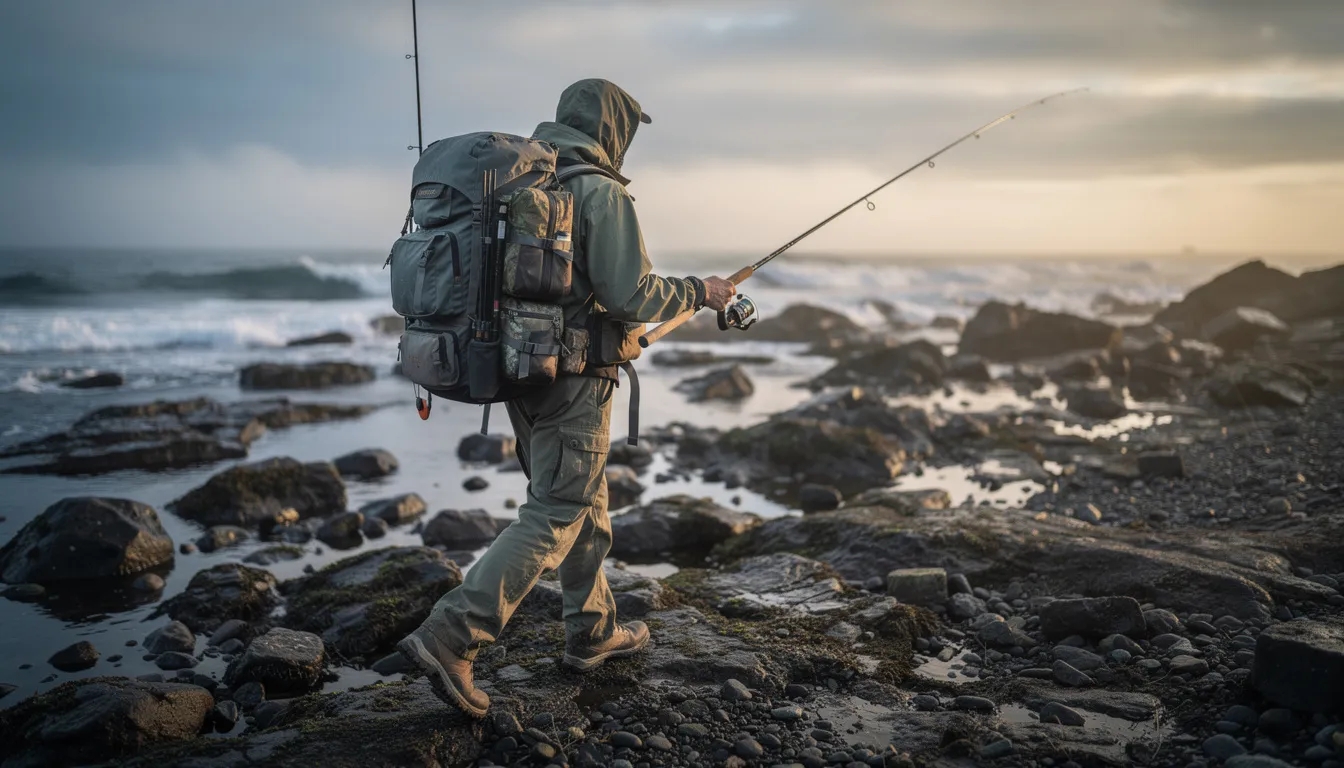
A fishing backpack with rod holder is a specialized tackle backpack that combines standard storage compartments with integrated rod belts, loops, or tubes designed to securely carry 1–2 fishing rods. Unlike generic outdoor packs, these bags are built specifically for anglers who need to transport lures, reels, tools, and rods in a single hands-free system.
These bags effectively replace traditional tackle boxes by offering organized, portable storage that moves with you. This design proves especially useful for shore anglers, kayak fishers, and anyone who hikes to their fishing spots. Instead of juggling a tackle box in one hand and rods in the other, everything stays secured to your back.
The key differences between a regular outdoor backpack and a purpose-built fishing tackle backpack include:
Feature | Regular Backpack | Fishing Backpack |
|---|---|---|
Rod security | None | Integrated holders/straps |
Tackle storage | Generic pockets | Dedicated tray slots |
Materials | Standard nylon | Water resistant fabrics |
Tool attachment | None | D-rings, MOLLE panels |
Common capacity ranges fall between 15–30 liters, with most anglers finding 20L ideal for day trips. A typical fishing bag of this size holds three 3600-size tackle trays, a 2500–4000 size spinning reel, fishing pliers, line spools, a rain jacket, and snacks for the day.
The rest of this article will help you choose the right style, size, and material for your specific fishing style—whether you’re working the bank, paddling a kayak, or traveling between cities and lakes.
Why Choose a Backpack With an Integrated Rod Holder?
The core benefit is simple: integrated rod holders keep your hands free and your fishing rods protected when walking to the spot, climbing rocks, or boarding a boat. This convenience transforms how you move through rough terrain and approach the water.
Functional benefits include:
- Easier transport of multiple rods without tangling
- Reduced damage to guides and rod tips during movement
- Safer navigation over slippery rocks and uneven ground
- Quicker setup once you reach the water
- Protection from accidental drops or impacts
Comfort and efficiency matter when you’re covering ground. You can wear the pack and have your rod secured to the side while checking maps, tying knots, or handling a landing net. Your fishing gear stays organized and accessible without requiring constant adjustments.
In 2024, more anglers are hiking to remote lakes, paddling kayaks with limited deck space, and even commuting by bike to urban rivers. A backpack with rod holder addresses all these scenarios.
Built-in rod systems are generally more stable and durable than aftermarket straps or DIY bungee setups. When you’re carrying a loaded pack over miles of trail or in bad weather, that stability matters for both your comfort and your equipment’s protection.
Key Features to Look For in a Fishing Backpack With Rod Holder
Not all fishing backpacks are built equal. Before you purchase, run through this feature-by-feature checklist to ensure you’re getting a pack that matches your needs.
Material Quality
The foundation of any durable fishing tackle bag starts with the fabric. Look for:
- 600D–900D high-density nylon or polyester for tear and puncture resistance
- PVC or PU coatings that add water resistance without excessive weight
- Reinforced stitching at stress points (straps, zippers, bottom panel)
- Abrasion-resistant buckles and webbing that won’t degrade from sun exposure
Higher denier ratings indicate thicker, more durable thread. A 600D fabric typically offers 5+ years of lifespan with proper care, especially when paired with quality double zippers.
Rod Holder Design
The gear holder system is what separates a fishing backpack from a standard hiking pack. Common designs include:
Type | Best For | Capacity |
|---|---|---|
Side rod belts | Quick access, spinning rods | 1–2 rods |
Bottom patched belts | Secure transport, longer hikes | 1–2 rods |
Tube-style holders | Maximum protection, telescopic rods | 2–4 rods |
Most systems accommodate standard 2-piece spinning or casting rods up to 7–8 feet when broken down. Adjustable Velcro straps handle rod diameters from 0.25 to 0.75 inches, fitting everything from ultralight trout rods to heavier bass equipment.
Storage Layout
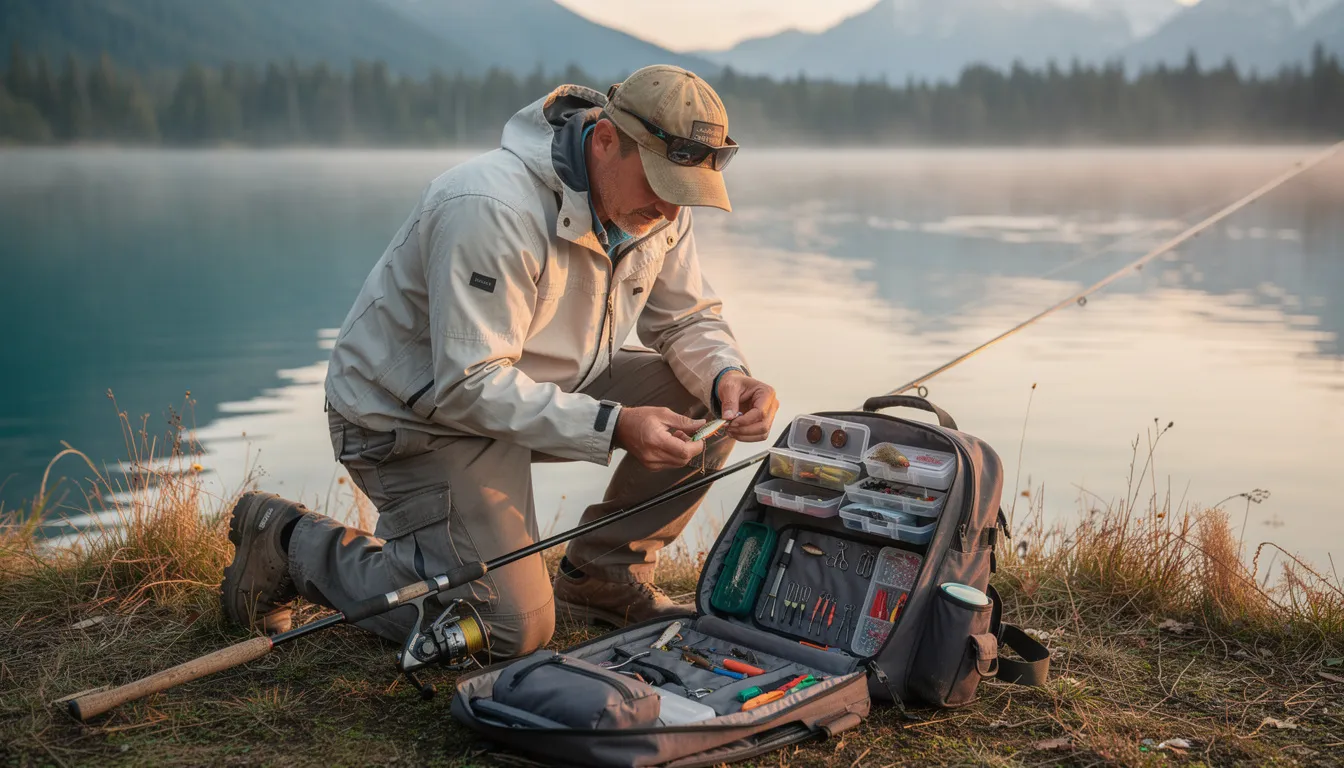
Your main compartment should fit standard tackle boxes—typically 16.5” x 11.8” x 5.5” capacity for three 3600 trays. Look for:
- Internal shockproof dividers to prevent tackle movement
- Zippered mesh pockets for small items like hooks and weights
- Separate compartments for soft plastics (to prevent chemical reaction with hard baits)
- An internal waterproof pad or liner to protect electronics
Exterior Organization
The outside of your pack should offer quick access to frequently used items:
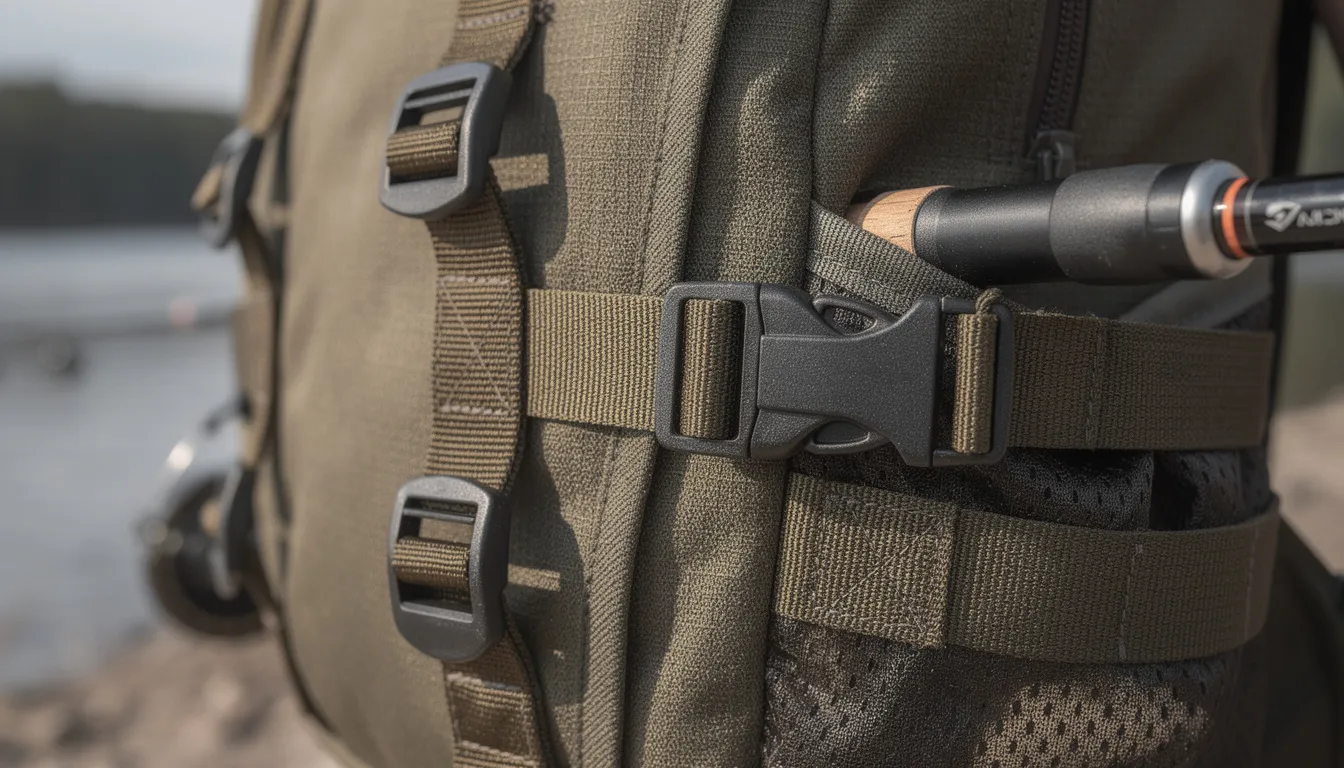
- MOLLE webbing for attaching additional pouches
- D-rings for nets, retractors, or carabiners
- Dedicated tool sleeves for fishing pliers and knives
- Water bottle pockets on the sides
- Front pockets for phone, wallet, and keys you need to open anytime
Comfort and Ergonomics
Carrying a loaded pack for hours demands proper weight distribution:
- Breathable padded back panels that reduce sweat buildup
- “H”-shaped or contoured straps that sit naturally on shoulders
- Adjustable sternum straps to stabilize the load
- Optional waist straps for heavy loads or technical terrain
Hardware Quality
Your zippers and buckles take constant abuse. Prioritize:
- Full-length double zippers for smooth operation
- Corrosion-resistant pulls suitable for freshwater and light saltwater
- Reinforced stitching at all attachment points
- Metal hardware over plastic where possible
Versatility Features
Some extras add genuine value for specific situations:
- Convertible straps (backpack to sling configuration)
- Removable waist belt for minimalist carry
- Hydration bladder compatibility for hot-weather trips
- Reflective accents for low-light visibility
Types of Fishing Packs With Rod Holders
Anglers can choose from several pack formats, each with distinct advantages depending on travel distance and gear volume.
Full-Size Fishing Backpacks
These 20L+ capacity packs feature dual-strap designs ideal for all-day outings. They carry multiple tackle trays, spare reels, and extra clothing with room to spare. The heavy duty construction handles long hikes and rough treatment.
Best for: Shore anglers covering several miles, multi-technique fishers who carry extensive tackle
Sling/Shoulder Bags With Rod Holders
Smaller footprint packs that swing around for quick tackle access. The single-strap design works well for minimalist setups and short evening sessions where you’re carrying essentials only.
Best for: Urban anglers, quick trips, wading where bulk is a hindrance
Compact Tackle Daypacks
Mid-sized options that balance mobility and storage. These typically feature one or two side rod belts with a bottom support strap, offering enough capacity for a half-day without excess weight.
Best for: Kayak anglers, anglers who fish 2–4 hours at a time, those who prefer traveling light
Travel-Oriented Duffels and Hybrids
Designed for longer trips, these bags serve as checked luggage or multi-day storage. Rods, reels, and clothing share one bag, with removable internal dividers and padded protection.
Best for: Traveling anglers moving between destinations, fly-in fishing trips, multi-day adventures
Pack Type | Capacity | Rod Capacity | Ideal Trip Length |
|---|---|---|---|
Full-size backpack | 20–35L | 2–4 rods | Full day to multi-day |
Sling bag | 8–15L | 1–2 rods | 1–3 hours |
Compact daypack | 15–20L | 1–2 rods | Half day |
Travel duffel | 30–50L | 2–4 rods | Multi-day trips |
How to Choose the Right Size and Layout
Size and internal layout determine how effectively you can organize your fishing tackle and avoid overpacking. Getting this right prevents frustration on the water.
Start by estimating your gear volume:
- Count your tackle trays (three 3600 boxes is typical for bass or multi-species anglers)
- Consider spare reels and their size
- Account for terminal tackle boxes, leader wallets, and tool pouches
- Add personal items: camera, tablet, rain gear, snacks
The ideal internal layout includes one large compartment that fits your standard tackle boxes plus 1–2 smaller internal pockets for leaders, fishing tools, and licenses. This keeps everything organized without forcing you to dig through layers of gear.
Exterior pockets should have clear purposes:
- Top pocket for frequently used lures and terminal tackle
- Side pocket for water bottle or thermos
- Rear hidden pocket for documents, cash, or car keys
Anglers who fish multiple techniques (bass, trout, inshore) benefit from modular storage with removable dividers. Specialist anglers targeting one species can choose smoother, more streamlined designs.
If you’re a smaller angler or outfitting a teenager, compact or sling bags prevent overloading shoulders and back. A 15L pack often carries everything needed for a productive half-day.
Durability, Weather Protection, and Maintenance
Fishing environments demand tough construction. Rain, mud, boat decks, and rocky shorelines will test any storage bag you bring along.
Durable Fabrics
The standard for quality fishing backpacks is 600D high-density nylon or ripstop polyester. Look for:
- PU or PVC coatings on exterior surfaces
- Reinforced bottom panels that resist abrasion from concrete piers and rocks
- Taped seams in critical areas
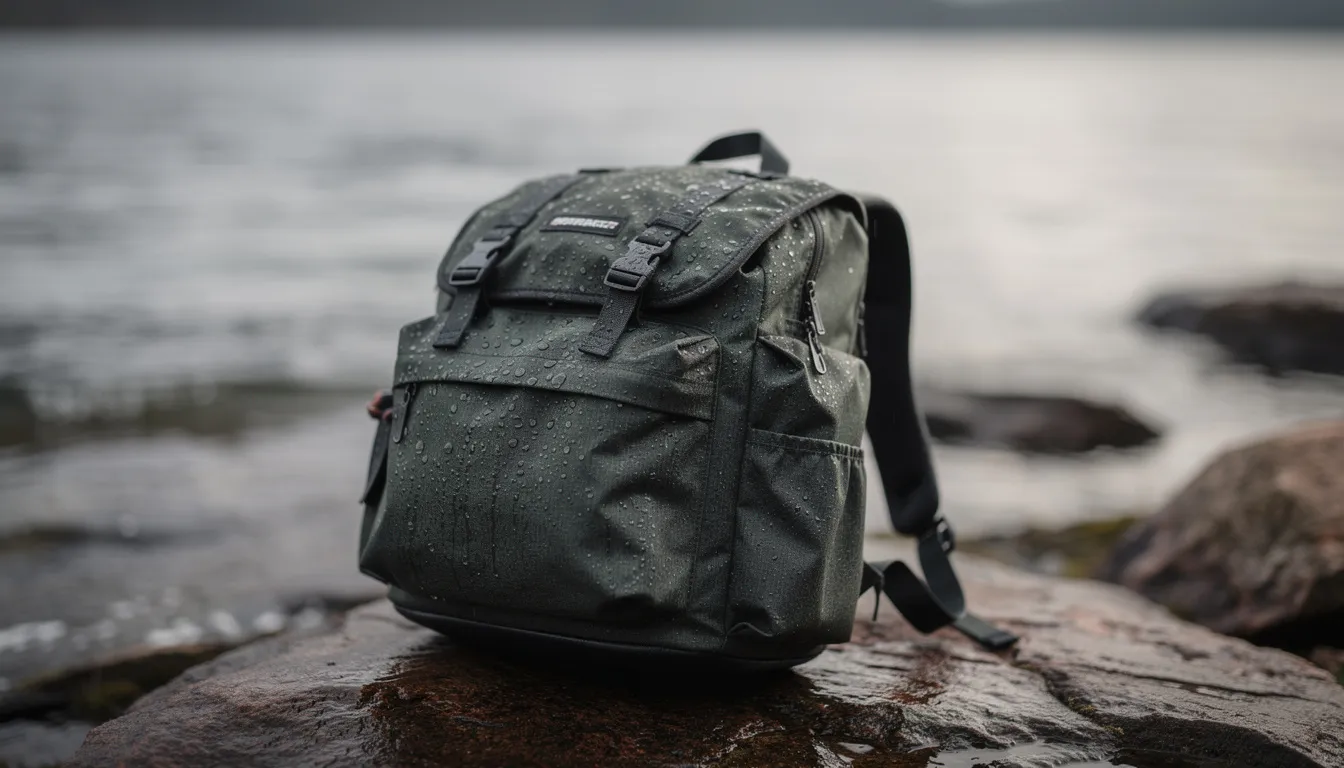
Weather Protection Elements
True water resistance comes from multiple features working together:
- Coated or waterproof zippers on main compartments
- Storm flaps over critical closures
- Elevated feet or reinforced bottoms that keep the pack off wet surfaces
- Optional rain covers for heavy downpours
Maintenance Tips
A little care extends your pack’s life significantly:
- Rinse off salt spray after coastal trips
- Dry the pack fully before storage to prevent mildew
- Lubricate zippers with silicone spray if they begin to catch
- Check rod holder straps and buckles periodically for wear
- Store in a cool, dry place away from direct sunlight
Higher-quality zippers and stitching cost more upfront but reduce the risk of failures on remote trips where replacement isn’t an option. Consider it insurance for your equipment.
Comfort and Ergonomics for Long Fishing Days
Comfort becomes crucial when carrying a loaded backpack several hours along riverbanks or shorelines. A poorly designed pack leads to fatigue, sore shoulders, and shortened trips.
Padded, breathable back panels promote airflow and reduce sweat buildup during warm weather. Look for mesh-covered foam or channeled designs similar to quality hiking packs. Some premium models offer ventilated aluminum frames that hold the pack slightly away from your back.
Adjustable shoulder straps with extra padding distribute weight more evenly. “H”-shaped or contoured designs follow the natural curve of your shoulders, reducing pressure points. Straps should adjust from approximately 30–48 inches to accommodate various torso sizes.
Sternum and waist straps stabilize the load, which becomes especially important when rods are mounted on the sides and can shift your center of gravity. A good waist belt transfers 20–30% of the pack’s weight to your hips, reducing shoulder strain.
Fit testing tips:
- Adjust strap lengths so the pack rides high on your back
- The bottom of the pack should sit at or above your waist
- With rods attached, walk around to check for sway or imbalance
- Tighten sternum straps just enough to prevent shoulder strap spread
Using the Rod Holder Safely and Effectively
Proper rod mounting prevents damage to guides and blanks while maintaining balance and safe movement through varied terrain.
Step-by-step rod securing:
- Insert the butt section of your rod into the bottom patched belt or loop
- Tighten any adjustable Velcro or clip at the base
- Secure the upper section with the side belt or strap
- Position the rod tip behind your shoulder and above head height
- Check that the rod doesn’t sway or shift when you walk
Position rod tips high and behind your shoulder to reduce snagging on branches, railings, and other obstacles. This also keeps guides away from potential impact points.
Best practices for safe rod transport:
- Limit yourself to 1–2 rods based on your pack’s design
- Remove reels if the rod holder can’t accommodate them securely
- Use protective rod tip covers for expensive equipment
- Remove rods before sitting in low kayaks, boarding crowded boats, or entering vehicles
Overloading rod holders creates imbalance and strains attachment points. Most packs designed for carrying 2 rods will handle that load comfortably, but adding a third often compromises both balance and security.
Extra Features That Add Real-World Value
Some extra features, while not essential, significantly improve usability and enjoyment on the water. Consider which ones match your fishing style before making a purchase.
Useful extras include:
- MOLLE system panels for adding pouches, tool holders, or camera mounts
- D-rings for attaching nets, fish grips, or retractors
- Dedicated tool holders for pliers and line cutters within quick access reach
- Integrated rain covers that deploy quickly when weather changes
- Reflective accents for visibility during early-morning or late-evening walks
Tech-friendly features:
- Fleece-lined sunglasses pocket that won’t scratch lenses
- Padded sleeves for small tablets, GPS devices, or action cameras
- Hidden pockets for keys, car documents, or cash
- Internal organization for phone and battery packs
Prioritize features you’ll actually use rather than choosing the pack with the longest spec list. Unnecessary complexity adds weight and cost without improving your fishing experience.
Some packs offer versatility features like convertible straps that transform the backpack into a sling or shoulder bag. This flexibility suits anglers who switch between hiking to distant spots and quick sessions near the car.
Fishing Backpack With Rod Holder FAQ
Can I carry a 2-piece 7 ft or 8 ft rod in a fishing backpack rod holder?
Most fishing backpack rod holders are designed to carry standard 2-piece spinning or casting rods up to about 7–8 feet when broken down into two sections. The side belts and bottom loops accommodate typical rod butt diameters and secure the upper sections adequately.
For longer surf rods, carp rods, or single-piece models exceeding 8 feet, you may need dedicated rod tubes or travel cases. Backpack side belts typically can’t provide sufficient security for these longer, heavier rods. Always check product specs for maximum recommended rod length and diameter before committing to a particular model.
Are these backpacks fully waterproof or just water-resistant?
Most fishing backpacks with rod holders use water resistant 600D nylon or polyester with PU coatings. This construction repels light rain and spray effectively but isn’t designed for submersion. Your gear stays protected during normal fishing conditions, but heavy downpours require additional precautions.
Store phones, cameras, and licenses in internal dry bags or waterproof pouches for extra protection. Some premium models include a detachable rain cover that significantly improves weather protection during extended exposure to rain. Look for packs with coated zippers and storm flaps over main compartments for the best water protection.
Is a fishing backpack with rod holder suitable for kayak fishing?
Many anglers successfully use compact or mid-sized fishing backpacks on kayaks, placing them behind the seat or mounted on a crate. The convenient access to tackle and the ability to transport gear from vehicle to launch point makes these packs ideal for kayak life.
Choose a model with a stable base and rod holders that secure rods tightly—loose rods shift when paddling or leaning, creating distraction and potential damage. Consider attaching the backpack to your kayak with a tether or carabiner to prevent loss in case of capsizing. Waterproof or heavily water resistant models work best in the splash-heavy kayak environment.
How much should I expect to spend on a quality fishing backpack with rod holder?
Typical 2024 price ranges break down as follows:
Category | Price Range | What You Get |
|---|---|---|
Budget | $25–$40 | Basic storage, standard zippers, adequate materials |
Midrange | $40–$80 | Better organization, quality zippers, padded comfort features |
Premium | $80+ | Superior materials, advanced features, extended durability |
Spending more typically provides better zippers, reinforced stitching, and superior back padding—features that matter for frequent anglers covering miles on foot. Occasional anglers can start with a reliable midrange model before upgrading if their fishing frequency increases. Look for discounts and coupon offers from reputable retailers, especially during off-season sales.
Can I use a fishing backpack with rod holder for other outdoor activities?
Many designs offer enough versatility for camping, hiking, cycling, and short travel thanks to general-purpose compartments and durable fabrics. The same features that protect fishing tackle—organization, weather resistance, comfortable carrying—work equally well for other outdoor pursuits.
Removable tackle trays and modular layouts allow the same pack to carry camera gear, snacks, or clothing on non-fishing days. Choose a neutral color like black, gray, olive, or khaki if you plan to use the backpack in urban or travel settings as well as on the water. This versatility often makes a quality fishing backpack a better value than single-purpose alternatives.